

Can Anxiety Disorders Be Cured? Learning Not to Let Anxiety Control You | Safe and Sound
Whether anxiety disorders are curable is a common question when patients or their loved ones are exhausted by prolonged, uncontrollable anxiety that affects sleep, work, studies, or relationships. However, to answer this correctly, one shouldn't just look at it from the perspective of "can it be completely cured?".
Anxiety is a natural human reaction, so the goal of treatment isn't always to eliminate all feelings of anxiety. More importantly, it's about helping patients reduce their anxiety levels, understand how their bodies and minds react, learn how to manage symptoms, and gradually prevent anxiety from dominating their daily lives.
Is anxiety disorder curable? What is the correct understanding?
Anxiety disorders can be treated, improved, and managed. However, "curable" does not mean that a person will never feel anxious again, as anxiety is a natural emotional response to pressure, change, or uncertain situations.
In everyday life, anxiety can arise before a presentation, an exam, a health issue, or an important event. Once the stressful factor passes, the feeling of anxiety usually subsides. Anxiety disorders differ in that the worry becomes excessive, prolonged, difficult to control, and impacts one's life.
Therefore, when asking "is anxiety disorder curable?", it's important to understand that this condition can be managed with support to reduce symptoms, improve quality of life, and help individuals better manage their anxiety. Treatment isn't just about making the feeling of anxiety disappear for a few days, but also about helping individuals understand what triggers anxiety and how to prevent it from controlling their lives.
Some people may see significant improvement with early detection, appropriate treatment, and consistent adherence to guidance; others may need more time, especially if anxiety has been prolonged or is accompanied by other mental health issues. Therefore, one should not conclude that they "cannot be cured," but rather view anxiety disorders as a condition that can be addressed through various approaches, including psychotherapy, medication when necessary, and supportive lifestyle habits.
>> See also: Is it possible to completely cure anxiety disorders?
When the important thing is not to let anxiety control your life.
When anxiety no longer dictates every choice made during the day, that's a significant step. The patient may still feel anxious in some situations, but they are no longer overly avoidant, no longer overwhelmed, and can return to essential activities in their life.
Things aren't necessarily getting better just because you're completely free of worry.
Anxiety can still arise during stressful times. A person recovering may still feel anxious before a meeting, a doctor's appointment, a job change, or a social situation. The concern isn't whether the anxiety persists, but rather whether the level of anxiety has decreased, whether it occurs less frequently, and whether the patient is managing it better.
If previously a feeling of anxiety was enough to keep the patient awake all night, cause them to avoid work, or prevent them from going outside, then being able to recognize that feeling, calm down more quickly, and resume their daily activities is a positive sign. Recovery doesn't always happen in a straight line, but patients can learn to be more proactive with their emotions.
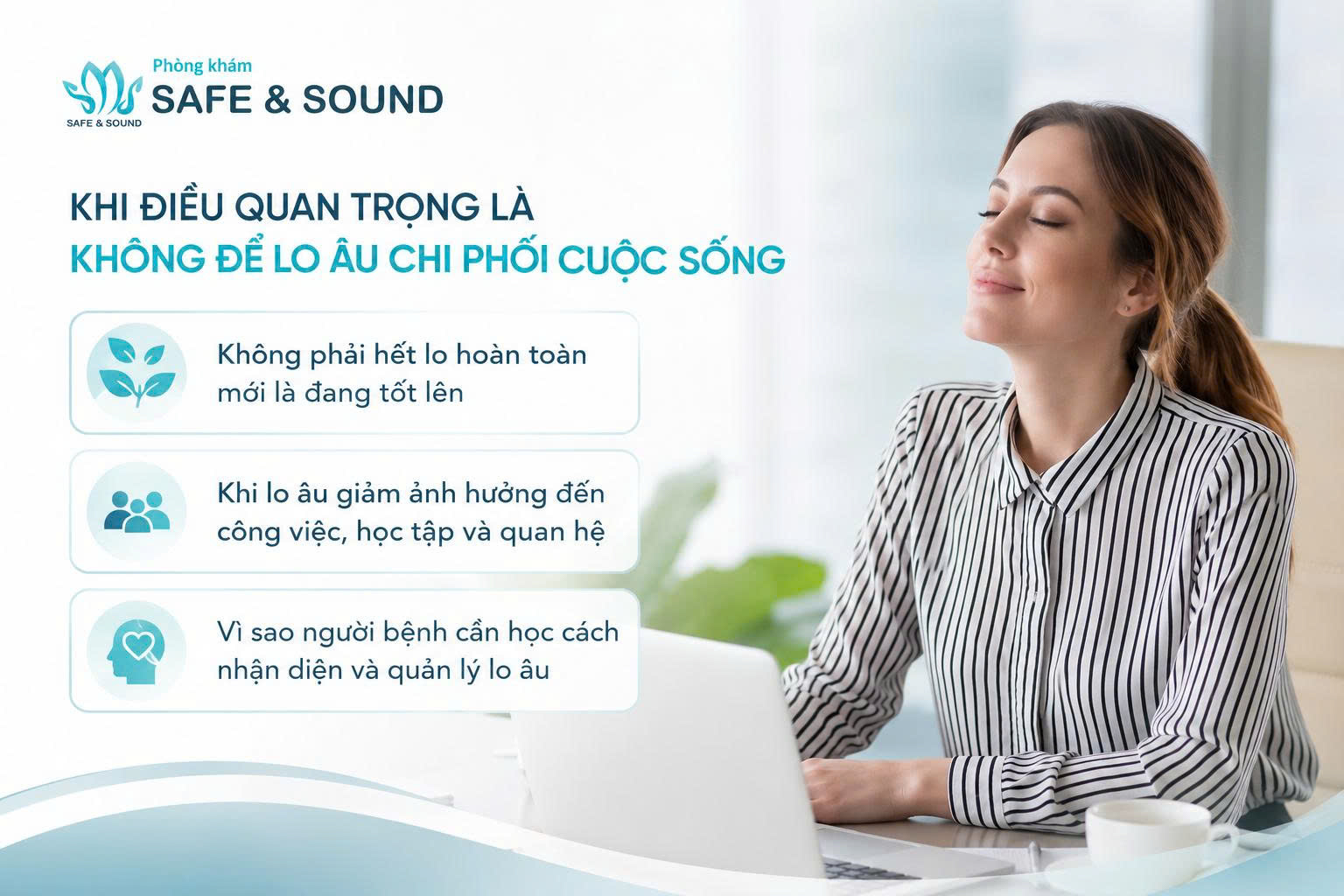
When anxiety decreases, it affects work, studies, and relationships.
Anxiety disorders can affect many aspects of life. Patients may avoid personal or professional responsibilities, withdraw, avoid going out, experience decreased self-confidence, or have panic attacks. When anxiety becomes overwhelming, patients not only feel mentally distressed but are also limited in their daily lives.
Therefore, a key goal of treatment is to reduce the impact of anxiety on work, studies, relationships, and personal life. Patients don't necessarily have to wait until they are completely free of anxiety to return to their lives. Sometimes, progress is demonstrated by their ability to work more regularly, attend classes, meet with loved ones, fulfill responsibilities, or break free from avoidance behaviors.
Why do patients need to learn how to identify and manage anxiety?
If anxiety is simply left to disappear, sufferers easily fall into a cycle of frustration: the more they try to push the feeling of anxiety away with willpower, the more they pay attention to it. Therefore, learning to identify anxiety is a crucial step in understanding what is happening in their thoughts, feelings, body, and behavior, such as avoiding situations, shortness of breath, rapid heartbeat, or imagining worst-case scenarios.
Methods such as talk therapy, cognitive behavioral therapy, dialectical behavioral therapy, medication when needed, and lifestyle support can help patients in different ways. The goal is not to deny anxiety, but to understand and manage it so that life is not gradually narrowed by anxiety.
Factors affecting the ability to improve anxiety disorders
The ability to improve anxiety disorders varies from person to person. Some respond well after receiving the right support, while others need more time. This depends on many factors related to the condition, treatment methods, and the patient's involvement.
- Early detection and intervention: Early recognition and appropriate treatment can help reduce the impact of anxiety before it profoundly affects work, studies, sleep, or relationships.
- Current symptom levels: Some people primarily experience insomnia, difficulty concentrating, and restlessness; others may experience panic attacks, self-isolation, avoidance of responsibility, or decreased self-confidence. Different levels of severity will require different support approaches.
- Co-existing mental health conditions: If anxiety disorders are present alongside depression or substance use disorders, a more holistic approach to support is necessary.
- Appropriate treatment methods: Patients may need talk therapy, CBT, DBT, medication, or lifestyle support. There is no single method that works for everyone.
- Patient cooperation and perseverance are crucial: The improvement process takes time, which may include multiple therapy sessions, time for medication to take effect, and follow-up appointments or monitoring as instructed.
- Maintaining supportive habits such as meditation, deep breathing, exercise, getting enough sleep, eating a balanced diet, and limiting stimulants can help reduce symptoms, but they are not a complete replacement for professional treatment when anxiety is persistent.
- Living environment and support: A safe space where they feel heard and are not judged can make it easier for patients to share their problems. Conversely, if they are often perceived as "overthinking" or "overreacting," they may be hesitant to seek help.
These factors show that asking "how long does it take to recover" or "is it completely curable" often doesn't have a single, universally applicable answer. More importantly, patients receive proper assessment, appropriate treatment options are chosen, and they persevere with the treatment process.

When does anxiety begin to be managed better?
During the recovery process, patients may not be completely free of anxiety, but they are still improving. The table below helps to better illustrate the difference between when anxiety is still dominant and when it is gradually being managed more effectively.
|
Aspects to observe |
When anxiety is still the dominant factor |
When anxiety is managed better |
|
Feeling |
Frequently feeling overwhelmed, insecure, and panicked. |
There are still times when I feel worried, but I calm down faster. |
|
Think |
It's hard to stop worrying, and easy to get caught up in worst-case scenarios. |
Recognize anxious thoughts and learn how to manage them. |
|
Behavior |
Avoiding responsibility, limiting going out, self-isolating. |
Gradually return to essential activities and reconnect with others. |
|
Sleep and the body |
Difficulty sleeping, rapid heartbeat, muscle tension, persistent fatigue. |
Symptoms decrease in frequency or have less impact. |
|
Work, studies |
Difficulty concentrating, reduced productivity, easy to give up. |
It may be possible to maintain a more stable job or studies. |
|
Quality of life |
Anxiety influences many of our daily choices. |
Patients are more proactive and less controlled by anxiety. |
This chart is not meant for self-assessment as a substitute for professional help, but it can help patients reflect on their progress more realistically. Sometimes, improvement isn't about "not worrying at all today," but about patients no longer letting worry dictate their actions as they did before.
If patients notice they are sleeping better, avoiding social interaction less, focusing more, or able to return to some activities they had previously abandoned, these are positive signs. Seeing these small changes can also help patients feel less pessimistic and give them more motivation to continue with the support process.
>> See also: Decoding misconceptions about anxiety disorders with a psychologist
Various approaches to support anxiety disorders are often considered.
Support for anxiety disorders typically requires evaluation by a psychologist, psychiatrist, or mental health professional. Depending on the condition, the patient may be recommended one or more different support approaches.
It is important not to self-medicate, discontinue medication on your own, or replace professional treatment with relaxation techniques. The following supportive approaches can play different roles in helping patients manage anxiety.
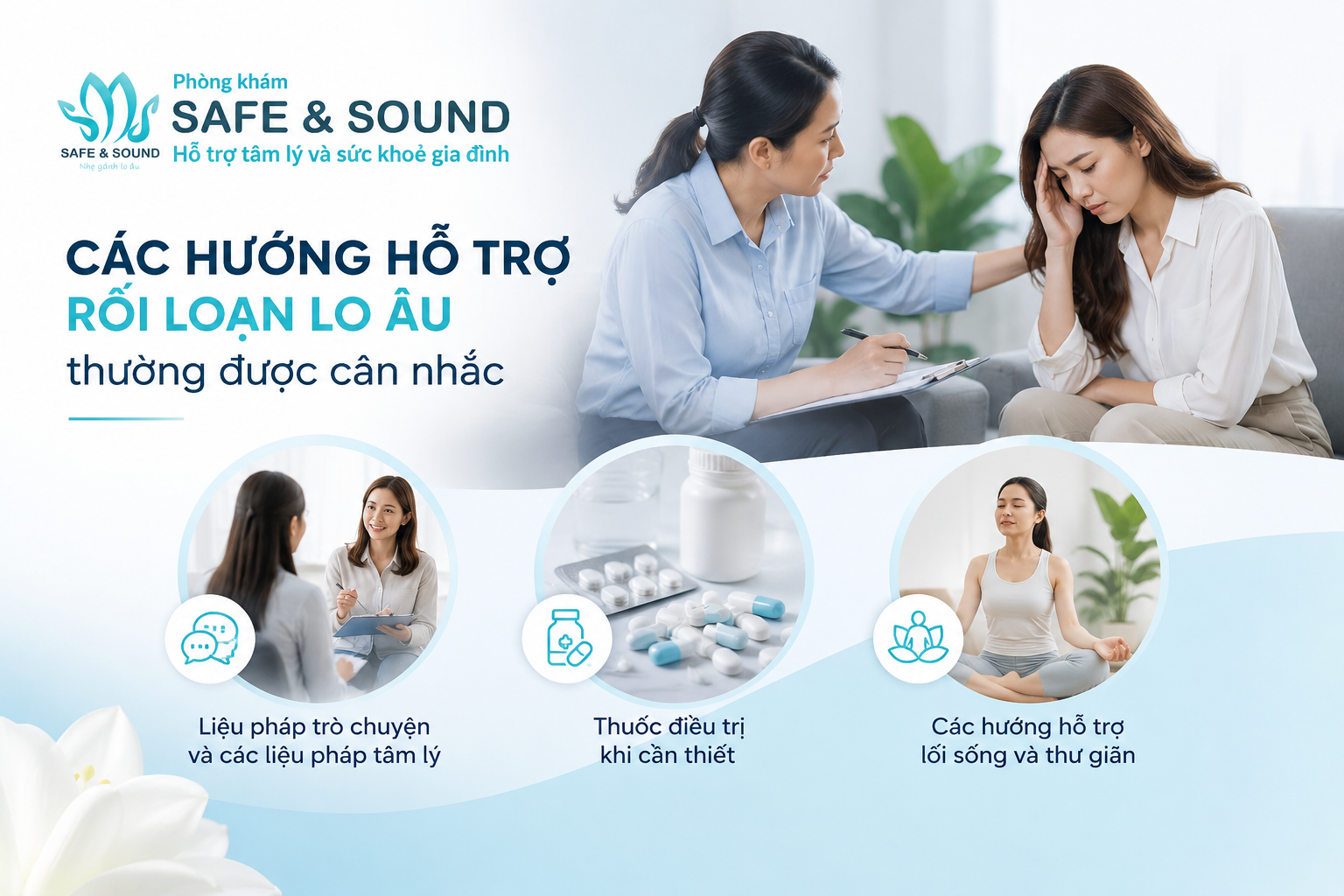
Talk therapy and other psychological therapies
Talk therapy creates a safe, non-judgmental space for patients to share their anxieties, thereby gaining a better understanding of the problem, identifying recurring thoughts, and finding more appropriate ways to cope with anxiety.
Cognitive behavioral therapy is often mentioned in anxiety treatment because it helps patients understand the connection between thoughts, feelings, and behaviors. Some cases may also be supported by safe environment exposure therapy or dialectical behavioral therapy to develop coping skills, regulate emotions, and improve relationships.
Medication as needed.
In some cases, doctors may consider medication to help control anxiety symptoms, such as benzodiazepines, SNRIs, SSRIs, or tricyclic antidepressants. Each group of medications has its own role and considerations: some work quickly but require caution due to the risk of dependence, while others need to be taken regularly and take time to show effect.
Because medications can cause side effects and require proper monitoring, patients should not self-medicate, reuse prescriptions, increase or decrease doses on their own, or stop taking medication when they feel better. Medication use should be prescribed and monitored by a doctor to minimize unwanted risks.
Lifestyle and relaxation guidelines
Supportive practices such as meditation, deep breathing, exercise, yoga, adequate sleep, and maintaining a balanced diet can help patients reduce stress, stabilize their bodies, and support the process of improving anxiety. Other methods such as acupuncture, light therapy, or pet therapy may also be considered as supplementary measures in some cases.
However, lifestyle changes should not be considered a complete substitute for professional treatment. Patients don't need to force themselves to "be more positive" or think that simply living a healthy lifestyle will make all symptoms disappear. When anxiety is persistent, difficult to control, or significantly affects quality of life, patients still need appropriate assessment and guidance.
Conclude
Anxiety disorders can be treated, improved, and managed, but "cure" should not be understood as eliminating all feelings of anxiety. Anxiety is a natural human reaction; the concern arises when anxiety becomes excessive, prolonged, difficult to control, and begins to dominate daily life.
The important thing in the recovery process is for patients to gradually reduce symptoms, regain quality of life, understand how to identify anxiety, and learn how to respond more appropriately. It's not just about the complete absence of anxiety that signifies improvement. When patients become less avoidant, sleep better, focus more, reconnect with others, and become more proactive in their lives, these are also noteworthy signs.
Patients should not self-medicate, discontinue medication on their own, or replace professional treatment with relaxation techniques if anxiety has significantly impacted their daily lives, studies, work, or relationships. If anxiety is persistent, difficult to manage, or overwhelming, SNS (Safe & Sound Clinic) can be a place where patients and their families can seek professional support in a cautious, non-judgmental, and situational manner.
